
Art Therapy
Art Therapy uses creative art-making — drawing, painting, and similar visual work — as a way to explore and express feelings that can be difficult to put into words. At SFCT it is offered as one of several complementary therapies, used alongside — never in place of — medical or psychiatric care.
Quick facts
- What it is
- A therapy that uses the process of making art, not the finished result, to support emotional expression and wellbeing.
- Common applications
- Working through grief or a difficult period; managing stress and anxiety; supporting emotional expression in children who find it hard to put feelings into words.
- Who may benefit
- Children and adults going through a difficult emotional period, or anyone who finds it easier to express themselves visually than verbally.
- Typical approach
- One-to-one or small-group sessions with an SFCT art therapist.
- Evidence / research status
- Evidence is still developing. Reviews of art therapy in settings such as cancer care report benefits for pain, anxiety, depression and quality of life, but researchers describe the overall evidence as limited in quality and call for larger, more rigorous studies.
Overview
Art Therapy doesn't require any artistic skill or experience — the value is in the process of creating, not in producing a particular kind of image. Working with an art therapist gives some people a way to approach feelings that are hard to talk about directly, at a pace that feels manageable. It's often used to support people through grief, stress, or a difficult period, and has a long-standing, specific use with children who haven't yet developed the vocabulary — or the willingness — to talk about what they're going through.
How it works
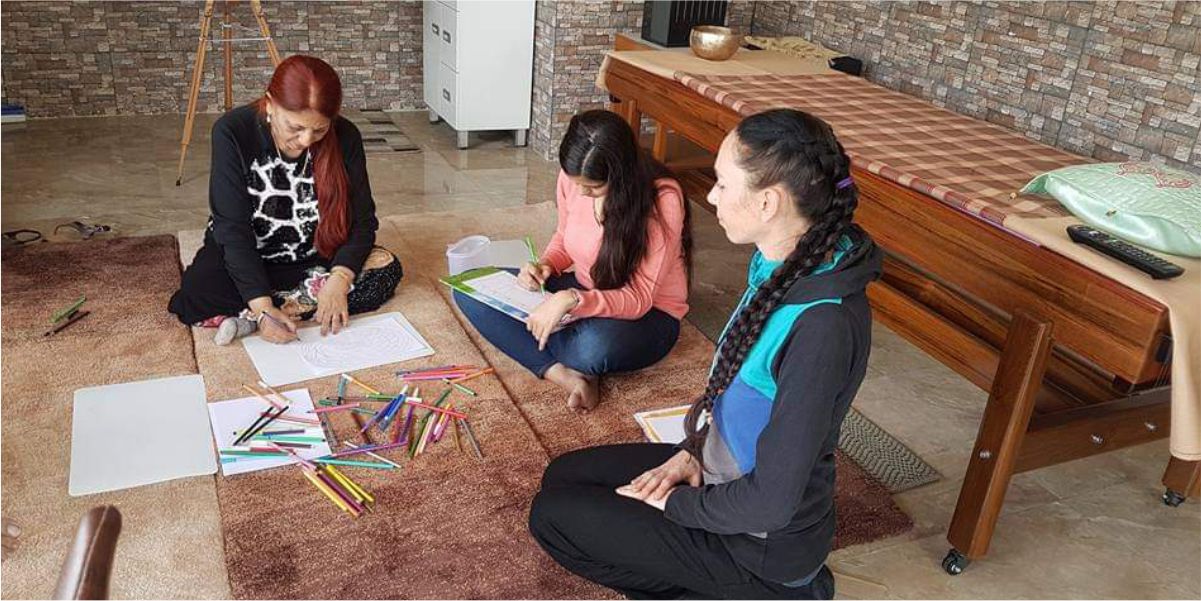
Sessions are led by a trained art therapist, who guides the process without directing what is created. The art itself isn't analysed or judged — it's a starting point for reflection and, where useful, conversation.
Who may benefit
People — children and adults — going through grief, a stressful period, or difficulty expressing emotions verbally, working with an SFCT therapist toward a specific, individually-assessed goal.
What it may help with
Emotional expression and processing; coping with grief or loss; stress and anxiety support; particularly useful for children who find verbal expression difficult.
Important considerations
Art Therapy is offered as a complementary approach alongside — never as a replacement for — medical or psychiatric care. Evidence for its effectiveness is still developing, and outcomes vary between individuals.
Evidence & references
- American Art Therapy Association, cited via StatPearls (NCBI Bookshelf), "Art Therapy," accessed 2026-08-29.
Frequently asked questions
Do I need to be good at art to benefit from this?
Is Art Therapy only for children?
Last reviewed 31 August 2026
Enquire about Art Therapy
Send SFCT an enquiry about this therapy and SFCT will get back to you directly.
Society for Complementary Therapies
Mental Health and Healing Center
Adarsh Palm Retreat Tower-4, Bougainvillea
Bellandur, Outer Ring Road, Bangalore, Karnataka 560103
Other Therapies
Clinical Hypnotherapy
Clinical Hypnotherapy is a talking-therapy technique that uses a guided state of focused relaxation and attention to support change in a specific habit, thought pattern, or area of difficulty.
Music Therapy
Music Therapy is the structured use of music — listening, playing, singing, or creating it — to support emotional, cognitive and social wellbeing, guided by a trained therapist toward a specific goal.
Bio-Neuro Feedback
Bio-Neuro Feedback (biofeedback) is a mind-body technique that uses real-time feedback about the body's own signals — such as heart rate, muscle tension, or breathing — to help someone learn to…
Foot Reflexology
Foot Reflexology is a therapy based on applying pressure to specific points on the feet.
Tibetan Singing Bowl Therapy
Tibetan Singing Bowl Therapy is a relaxation practice that uses the resonant sound and vibration of metal or crystal bowls.