
Music Therapy
Music Therapy is the structured use of music — listening, playing, singing, or creating it — to support emotional, cognitive and social wellbeing, guided by a trained therapist toward a specific goal. At SFCT it is offered as a complementary therapy, alongside — never in place of — medical or psychiatric care.
Quick facts
- What it is
- A therapy that uses music, tailored to the individual, to support wellbeing goals such as stress management or emotional expression.
- Common applications
- Stress and mood support; sleep difficulty; emotional expression; SFCT has previously noted particular relevance for older adults, palliative care, and children.
- Who may benefit
- People of any age looking for support with stress, mood, or emotional expression, working with an SFCT therapist on a specific goal.
- Typical approach
- Individual or group sessions using listening, singing, playing instruments, or songwriting, tailored by the therapist to the person.
- Related therapies
- Bio-Neuro Feedback
- Evidence / research status
- There is moderate-quality evidence that adding music-based approaches to usual care can help with depression and anxiety symptoms, and research suggests music can have a beneficial effect on stress. Evidence varies by use — for example, a large trial found no added benefit of music therapy for autism spectrum disorder beyond standard care. Much of the wider research base is still described as preliminary.
Overview
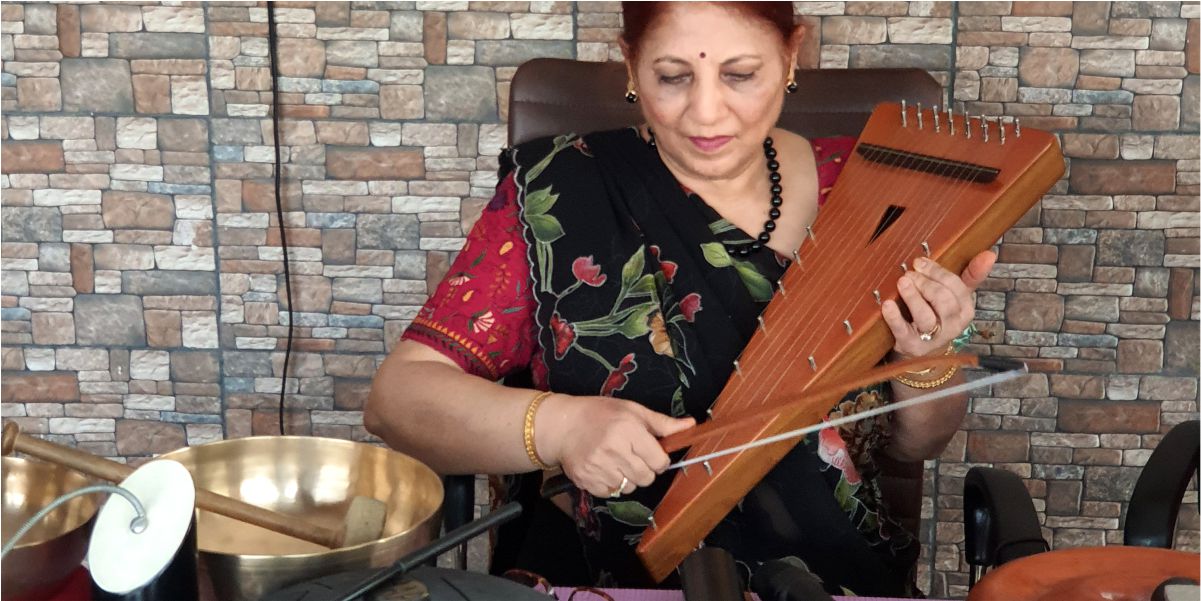
Music Therapy doesn't require any musical training or ability — it uses music as a tool, not a performance. An SFCT music therapist works with the person to choose an approach, whether that's listening, playing, or creating music together, suited to what they're working on. It's been used to support people managing stress, low mood, or sleep difficulty, and has a particular history of use with older adults, people in palliative care, and children.
How it works
A trained music therapist designs sessions around the person's specific goal, using techniques such as guided listening, relaxation through music, or active participation like singing or playing an instrument. Music therapy appears to work in part by providing a distraction from distress and by directly influencing mood and physiological arousal.
Who may benefit
People of any age working with an SFCT therapist on stress, mood, sleep, or emotional-expression goals.
What it may help with
Stress reduction; mood and anxiety support (moderate evidence when added to other care); sleep difficulty; emotional expression and communication.
Important considerations
Music Therapy is offered as a complementary approach alongside — never as a replacement for — medical or psychiatric care. Evidence quality varies significantly by use, and much of the underlying research is still preliminary.
Evidence & references
- National Center for Complementary and Integrative Health (NCCIH), National Institutes of Health, "Music and Health: What You Need To Know," accessed 2026-08-29.
A Historical SFCT Collaboration
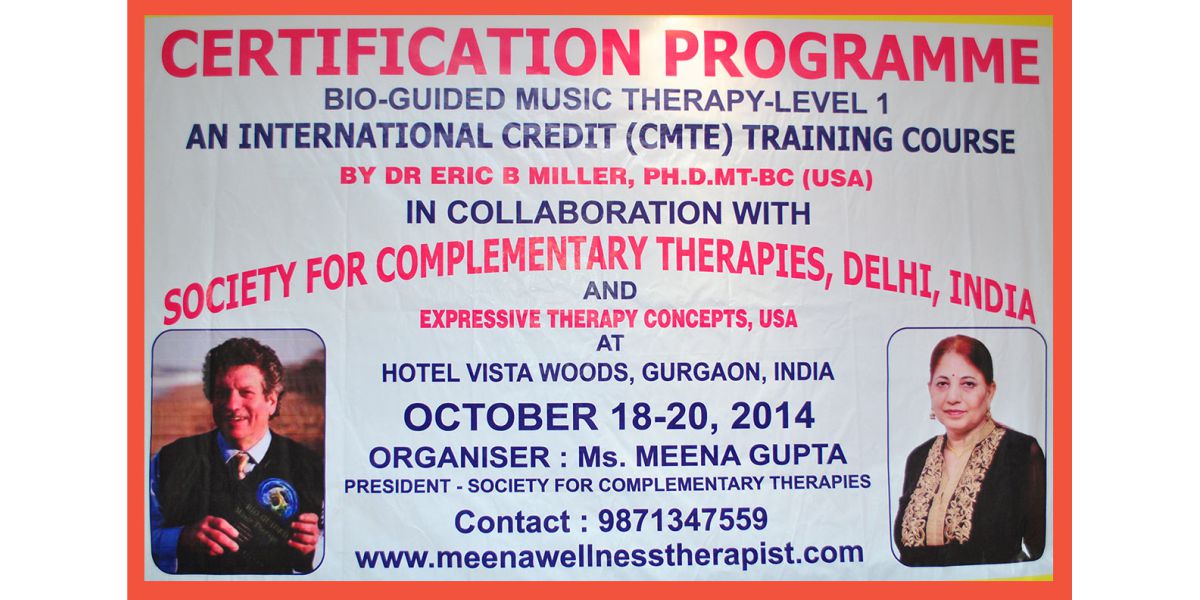
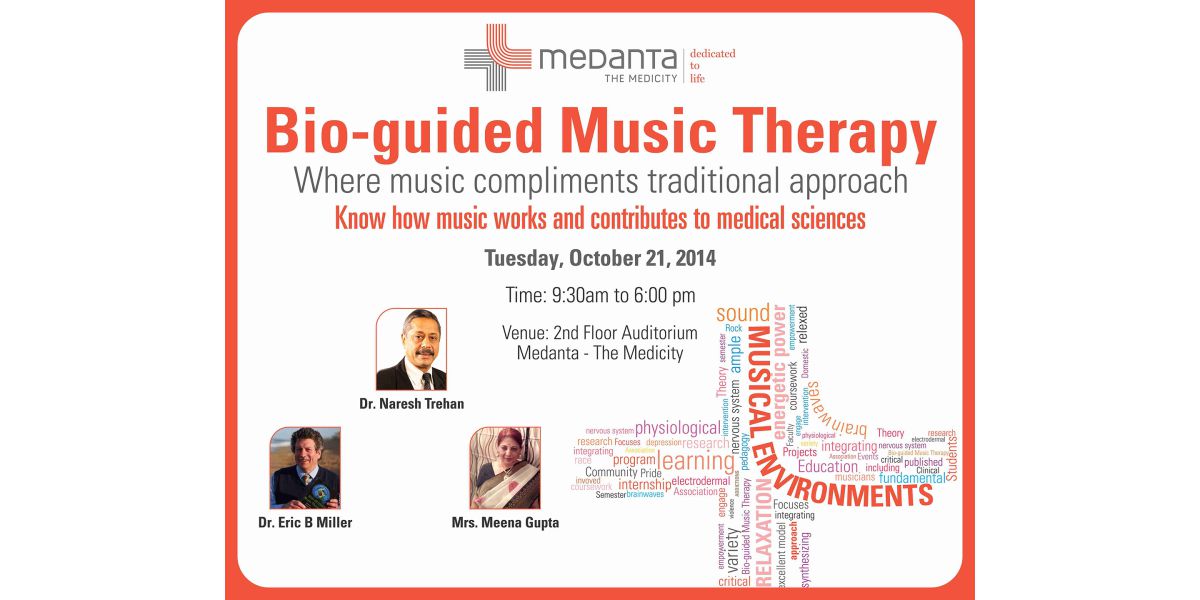
Between 2013 and 2014, SFCT organized a series of training seminars in the Delhi-NCR region with Dr. Eric Miller — a U.S.-based biofeedback therapist and board-certified music therapist, and author of Bio-Guided Music Therapy. These included a seminar at VIMHANS (Vidyasagar Institute of Mental Health, Neuro & Allied Sciences), New Delhi, and a two-part 2014 program comprising a certification course and a seminar for resident psychiatrists and psychologists at Medanta – The Medicity, Gurgaon.
Frequently asked questions
Do I need to be musical to benefit from Music Therapy?
Is Music Therapy the same as just listening to music I enjoy?
Last reviewed 31 August 2026
Enquire about Music Therapy
Send SFCT an enquiry about this therapy and SFCT will get back to you directly.
Society for Complementary Therapies
Mental Health and Healing Center
Adarsh Palm Retreat Tower-4, Bougainvillea
Bellandur, Outer Ring Road, Bangalore, Karnataka 560103
Other Therapies
Clinical Hypnotherapy
Clinical Hypnotherapy is a talking-therapy technique that uses a guided state of focused relaxation and attention to support change in a specific habit, thought pattern, or area of difficulty.
Art Therapy
Art Therapy uses creative art-making — drawing, painting, and similar visual work — as a way to explore and express feelings that can be difficult to put into words.
Bio-Neuro Feedback
Bio-Neuro Feedback (biofeedback) is a mind-body technique that uses real-time feedback about the body's own signals — such as heart rate, muscle tension, or breathing — to help someone learn to…
Foot Reflexology
Foot Reflexology is a therapy based on applying pressure to specific points on the feet.
Tibetan Singing Bowl Therapy
Tibetan Singing Bowl Therapy is a relaxation practice that uses the resonant sound and vibration of metal or crystal bowls.